Juneteenth Without the Truth Is Just Another Day Off
When the federal government made Juneteenth a national holiday in 2021, it was hailed as a long-overdue recognition of America’s original sin: slavery. Juneteenth marks the day enslaved people in Texas finally learned they were free—more than two years after the Emancipation Proclamation. But a holiday without honest education risks becoming little more than symbolism without substance.
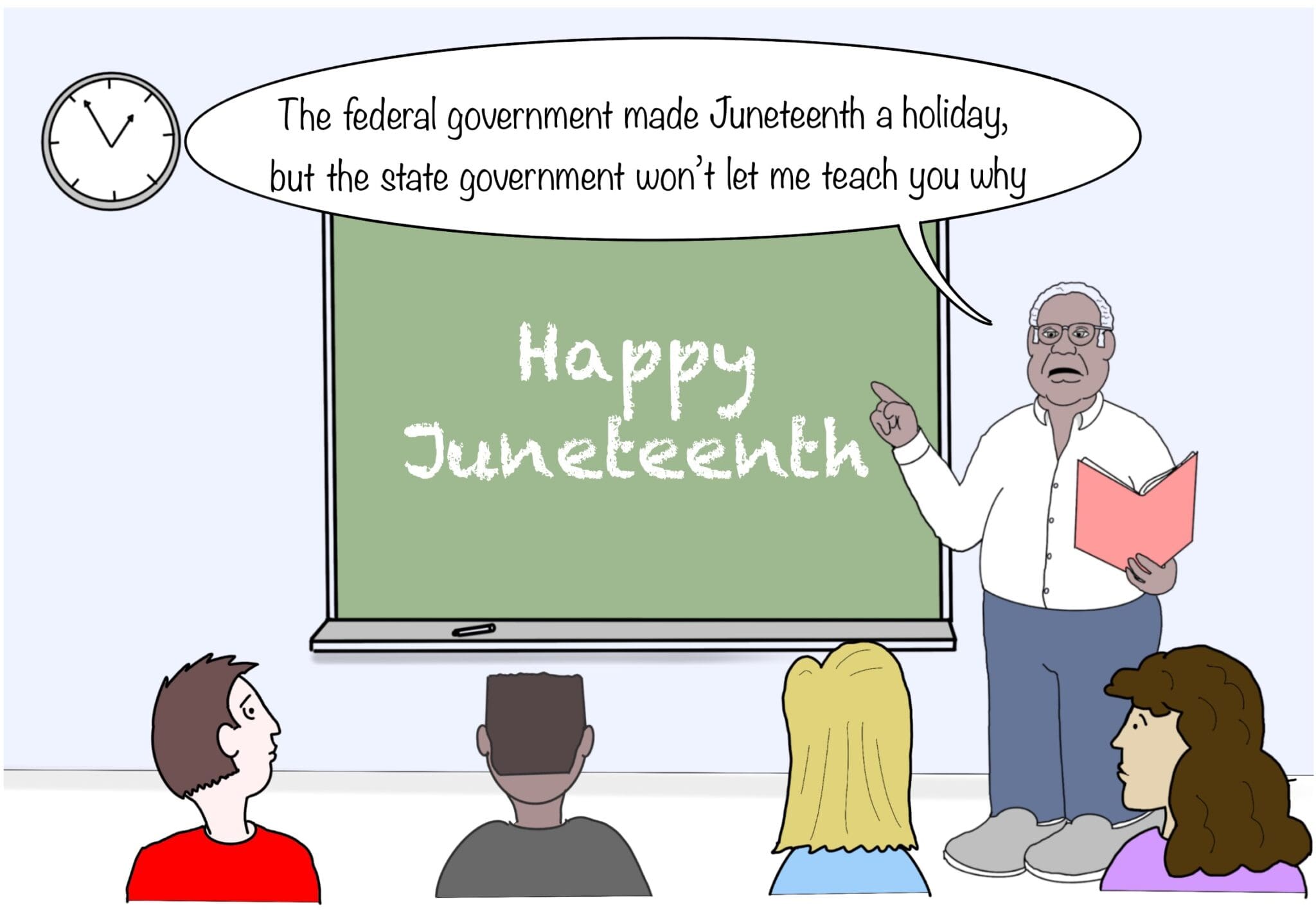
That contradiction is now impossible to ignore. While Juneteenth is celebrated nationally, many state governments are actively restricting what schools can teach about American history. Under the broad and politically charged label of “diversity, equity, and inclusion,” states have barred or chilled instruction about slavery, racism, and their lasting consequences. Teachers are warned away from uncomfortable facts. School districts fear losing funding if lessons stray too close to the truth.
The result is absurd: we commemorate emancipation while discouraging students from learning why emancipation was necessary.
This hollowing-out of history is mirrored in Donald Trump’s evolving relationship with Juneteenth. During his first term, he took credit for drawing attention to the holiday. Now, he has refused to publicly acknowledge it at all, opting instead to complain that the federal calendar contains too many holidays where people “don’t work.” It’s a telling criticism—one that avoids the holiday’s meaning while subtly undermining it.
You cannot honor Juneteenth while banning books, muzzling teachers, and sanitizing slavery’s horrors. A celebration of freedom that fears historical truth is not progress—it’s performative amnesia.
If Juneteenth is to mean anything, it must come with a commitment to teach the full American story. Otherwise, it’s just another day off—and a missed opportunity to tell the truth.