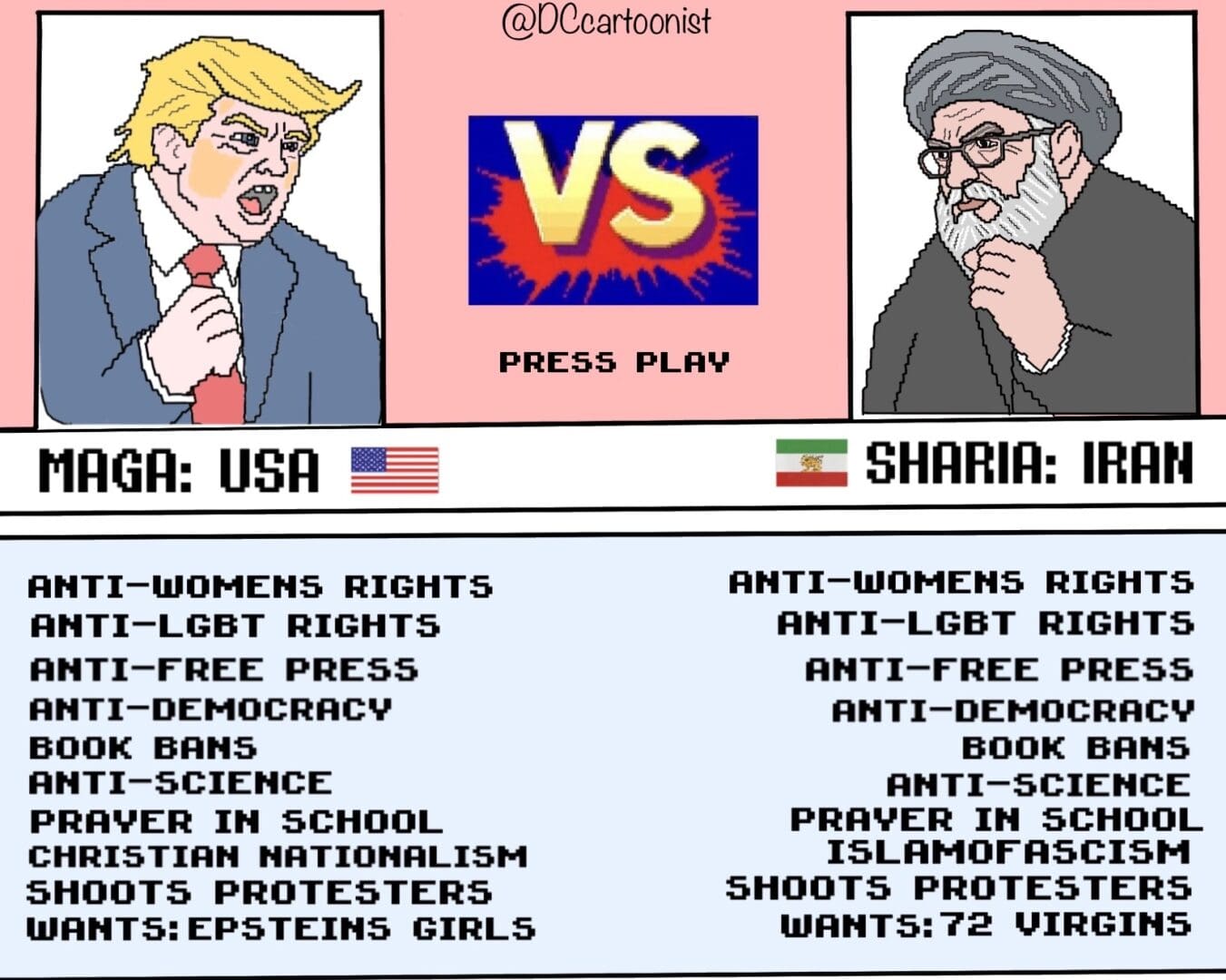
Choose Your Fighter
There is an uncomfortable irony at the heart of today’s politics: the loudest champions of so-called “Christian nationalism” often claim that Islamic extremism represents everything America must oppose—while echoing many of its underlying impulses.
To be clear, there are vast and important differences. Islamist regimes in places like Iran or under Taliban rule impose far more severe and violent restrictions on personal freedom. But acknowledging that reality should not blind us to the parallels in worldview that are increasingly visible at home.
Christian nationalism, as it is currently expressed in MAGA politics, is defined by a rejection of pluralism. It elevates one religious identity above all others and seeks to fuse that identity with the machinery of the state. In practice, that has meant efforts to insert prayer into public schools, roll back LGBTQ rights, restrict women’s autonomy, and dismiss scientific consensus on issues ranging from public health to climate change.
These are not merely policy disagreements. They reflect a broader philosophy that prioritizes doctrinal authority over individual liberty—one that is fundamentally at odds with the founding principles of a secular, democratic republic.
What makes this contradiction particularly striking is the rhetoric. Christian nationalists frequently cast Islam as an existential threat to American values, yet the version of governance they advocate shares the same illiberal instincts: intolerance of dissent, suspicion of difference, and a desire to impose moral conformity through law.
America’s strength has always rested on its commitment to freedom of belief—not the elevation of one belief system above others. If we are serious about defending that tradition, we should be wary of extremism in all its forms, including the kind that wraps itself in the language of patriotism and faith.