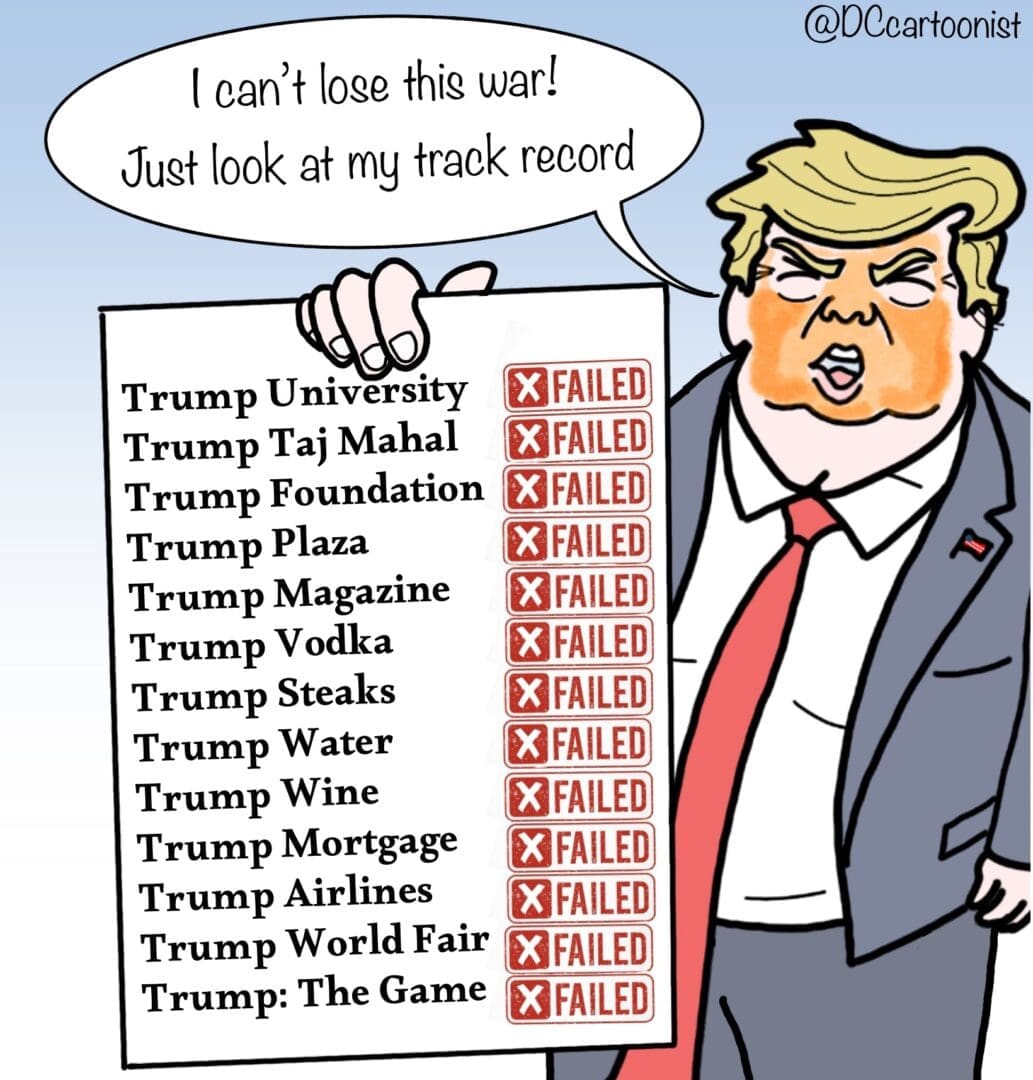
Trump Steaks, Trump Vodka, Trump War
If anyone could lose a conflict with Iran, it’s probably Donald Trump. After all, this is a man whose résumé of failures includes Trump University, Trump Magazine, Trump Vodka, Trump Wine, Trump Steaks, Trump Airlines, and multiple Trump casinos — which is especially impressive considering casinos are one of the few businesses where customers literally walk in voluntarily to hand over their money.
But the larger problem is that there may be no “winning” this war at all, because no one can clearly explain what victory actually looks like. Is the objective regime change? Preventing nuclear weapons? Deterrence? Retaliation? The answer seems to change depending on the day and the spokesperson. We’ve seen this movie before in Iraq and Afghanistan: vague objectives, shifting justifications, and confident promises that the conflict will be short, necessary, and decisive. We were told Iraq possessed weapons of mass destruction that were never found. We were told democracy would flourish quickly. Instead, the wars dragged on for decades.
The Iraq War lasted more than eight years beyond George W. Bush’s infamous “Mission Accomplished” speech. By most estimates, the combined wars in Iraq and Afghanistan cost trillions of dollars once operational spending, debt interest, and long-term veteran care are included. Thousands of American service members died, tens of thousands were wounded, and hundreds of thousands of civilians in the region lost their lives.
Now we are repeating the same pattern. In just three months, estimates for Trump’s Iran conflict have already reached tens of billions of dollars. American troops have been killed and injured. Thousands of Iranians — many of them civilians — are dead. Meanwhile, Iran’s leadership remains firmly in power, arguably more entrenched than before as the Revolutionary Guard uses the conflict to tighten domestic control.
We’ve been here before. The real mystery is why America keeps insisting it has learned something from these wars while continuing to repeat them almost step for step.