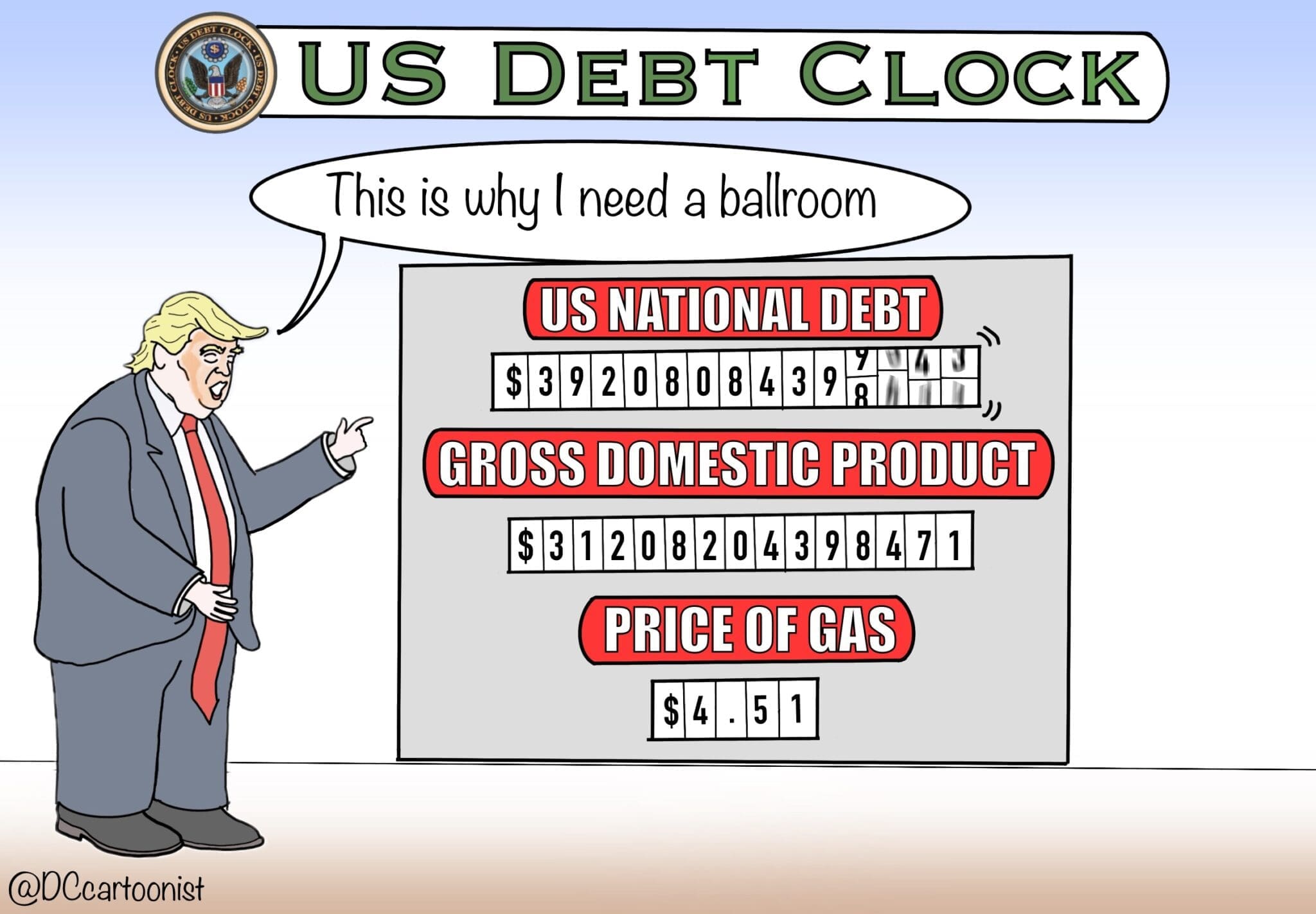
Mar-a-Lobby
There are obviously much bigger issues to worry about, but Trump’s ballroom is still an easy target. Opulence in the face of mounting national debt and persistent inflation just seems absurd. At a time when ordinary Americans are struggling with high grocery prices, housing costs, and interest rates, the image of a lavish new presidential ballroom feels less like leadership and more like Versailles on the Potomac.
You may have seen recent news that despite Trump’s promise the ballroom would cost taxpayers nothing, Congress is now moving forward legislation that includes roughly $1 billion earmarked for security improvements tied to the broader project. Technically, it is true that taxpayers are not directly paying for the ballroom’s physical construction. But Trump’s insistence that the project be privately funded may actually be worse in some ways.
Think of it this way: while the Trump administration argues that using private money for the $400 million project saves public funds, critics and watchdog groups warn the arrangement creates a “pay-to-play” environment that avoids the normal oversight attached to federal projects. Allowing private companies and wealthy donors to contribute essentially unlimited amounts gives them a way to curry favor while sidestepping many traditional lobbying and ethics restrictions.
Keep in mind, these are often the very same corporations regulated by the executive branch. So if you are, say, a major tech company hoping to loosen federal restrictions on artificial intelligence or silence concerns about massive new data centers, donating to Trump’s ballroom suddenly becomes a very smart investment. It’s not philanthropy. It’s influence shopping dressed up in gold trim.