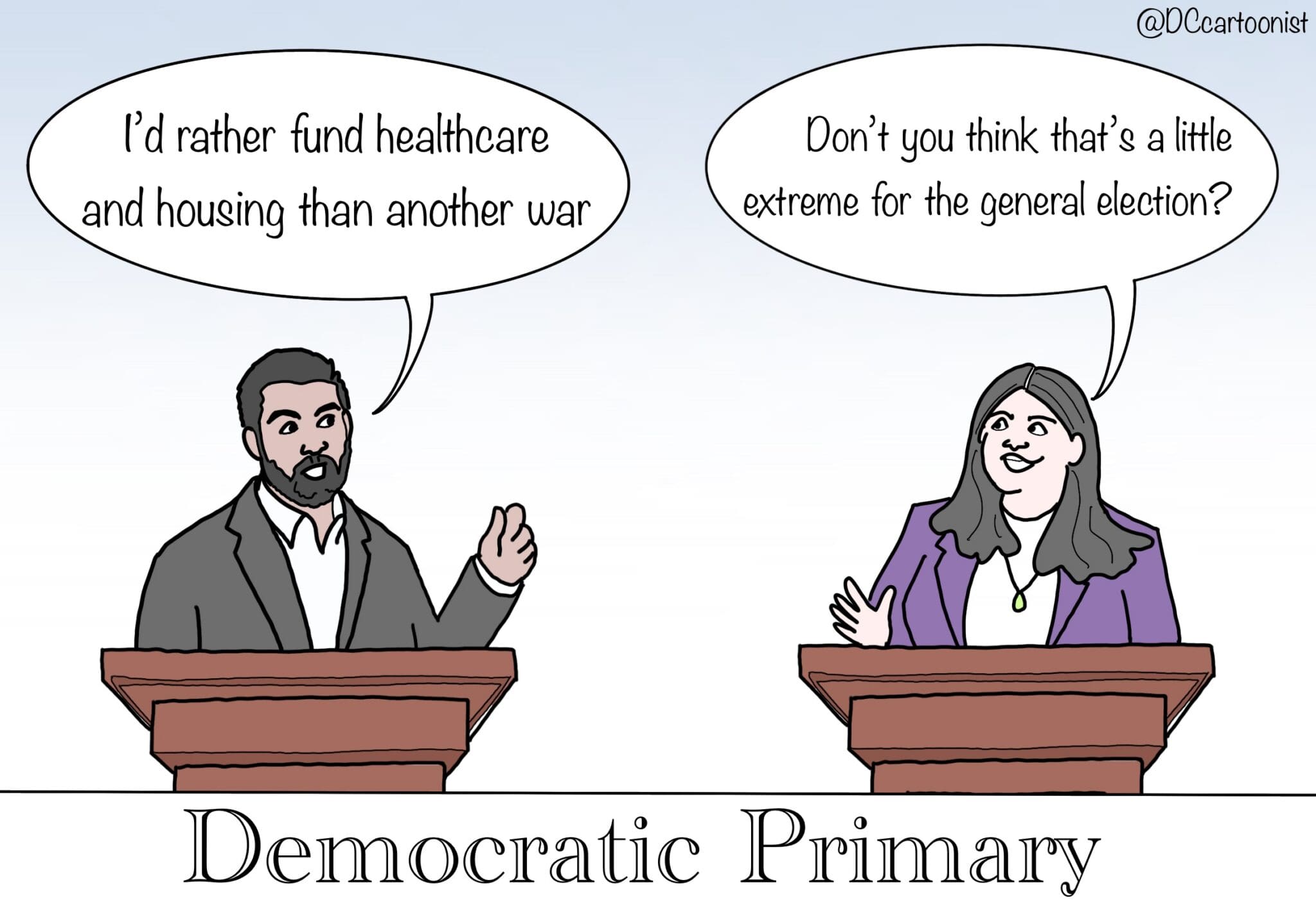
Moderate to a Fault
Democratic primaries increasingly resemble an audition in which candidates must inspire the base while reassuring everyone that nothing particularly inspiring will happen.
Promise affordable housing? Careful. Universal healthcare? Sounds risky. Suggest spending more on Americans and less on another war? Somebody summon a consultant.
There is a legitimate debate about which policies work and which candidates can win. But “electability” too often becomes a convenient way to dismiss reasonable ideas without discussing their merits. The progressive must explain every dollar of healthcare spending; the moderate apparently need only explain that the progressive makes donors nervous.
Michigan offers a particularly bitter illustration. After narrowly losing the Democratic Senate primary to Abdul El-Sayed, Haley Stevens endorsed his Republican opponent, Mike Rogers. Her reversal followed disputes over Israel, campaign rhetoric and whether she was welcome at a unity event. Those disagreements deserve honest scrutiny. They do not make endorsing the opposing party an act of Democratic coalition building.
Consider the logic: To protect Democrats from an allegedly unelectable Democrat, help elect a Republican. Apparently, the road to the political center takes a sharp right at personal grievance.
Stevens may have effectively ended her future in Democratic politics. That remains a prediction, but endorsing the other team is certainly an unconventional rebuilding strategy.
Democrats cannot win without accommodating differences. Progressives need persuadable voters; moderates need an energized base. Neither benefits when ordinary aspirations become evidence of extremism.
Wanting people housed, healthy and free from unnecessary wars should be the starting point, not a disqualifying scandal.