A Base Without a Basis
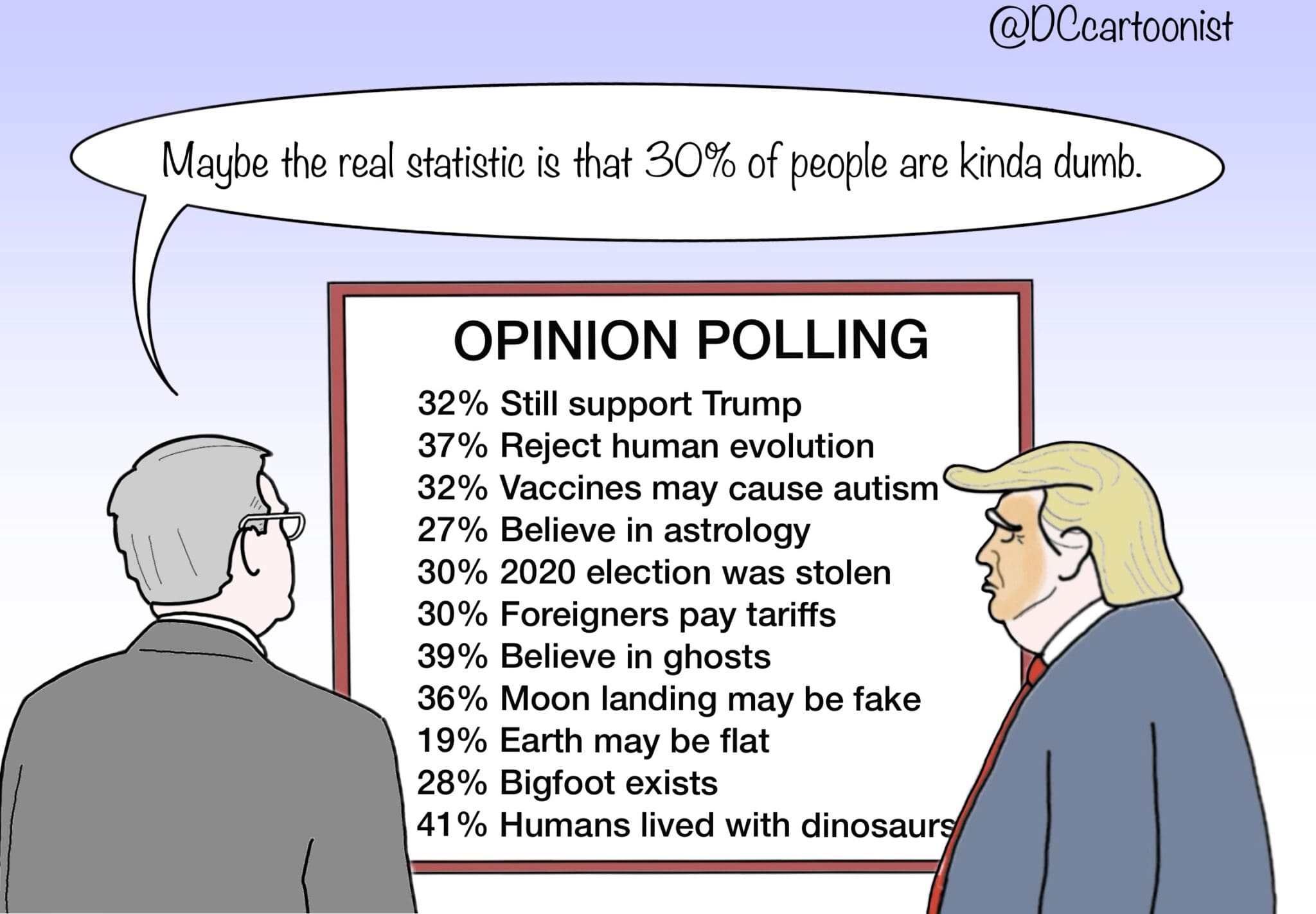
I’m developing a theory about America’s seemingly indestructible reserves of nonsense. Call it the Thirty Percent Principle: whatever happens, whatever the evidence, a substantial minority will insist reality has gotten the story wrong.
The Earth is flat. The moon landing was staged. Vaccines are a sinister plot. Evolution is fiction. Thirty percent isn’t a consistent finding across these beliefs; it’s my shorthand for the constituency that seems permanently beyond persuasion.
Donald Trump recognized the opportunity. He once boasted that he could shoot somebody on Fifth Avenue without losing voters. Most politicians would consider that an indictment of their supporters. Trump offered it as a testimonial.
I’m beginning to wonder how many of these constituencies share a mailing list. Research has found an association between Trump approval and several conspiracy beliefs. Apparently, distrust of reality can be a package deal.
Perhaps the appeal is knowing something the supposedly smart people don’t. Scientists have evidence? Suspicious. Journalists have documentation? Corrupt. Your uncle filmed a video inside his truck? Finally, an independent thinker.
Calling this stupidity is tempting. But the intellectual gymnastics required to excuse every contradiction suggest considerable effort. The conclusion is fixed; the reasoning does backflips to accommodate it.
Once belief becomes identity, admitting error feels like surrender. Every correction becomes an attack, every debunking further proof of a coverup.
Democracy requires people willing to reconsider. Disagreement is manageable. A constituency that treats changing its mind as betrayal presents a different problem.
How do you persuade people who consider being unpersuadable a virtue?