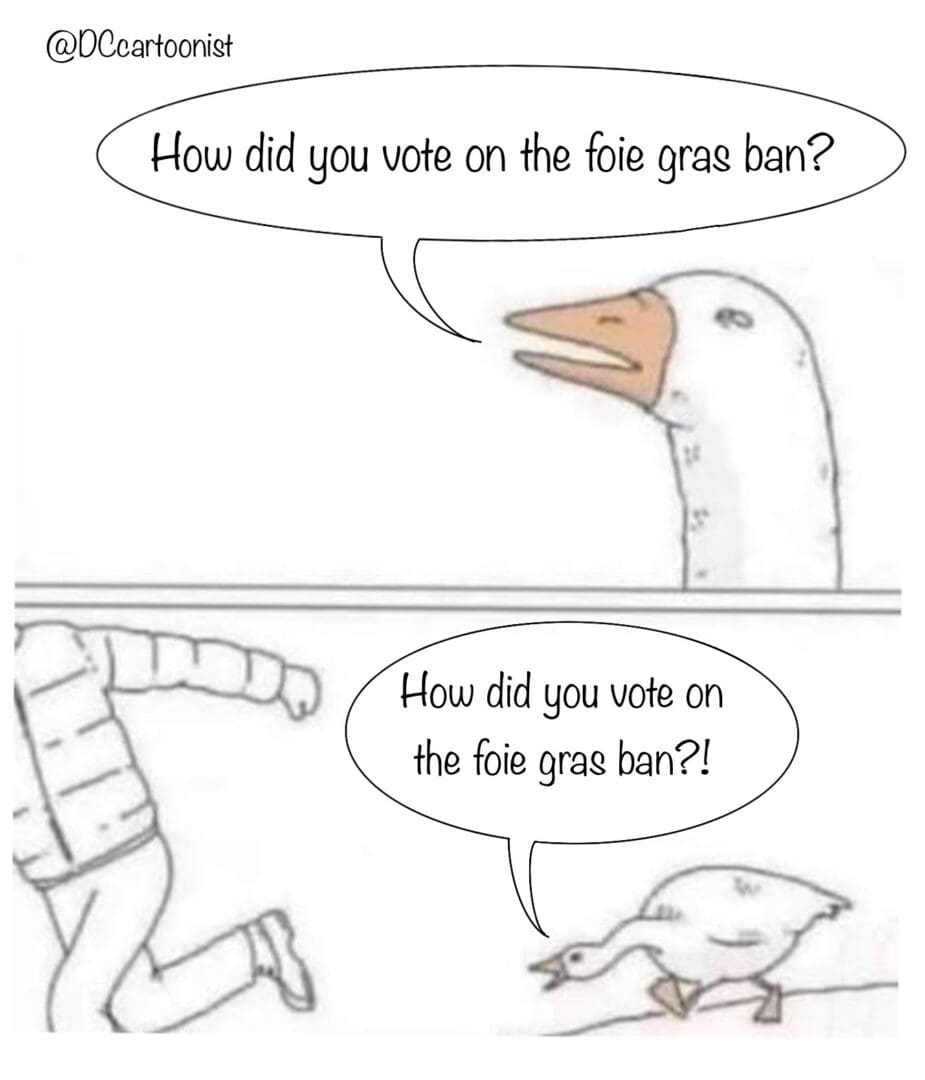
Let Them Eat Foie Gras
Washington has schools that need more money, a police department stretched for resources and a president who treats the capital like his personal model train set. Donald Trump wants a 250-foot triumphal arch. National Guard troops have become such a fixture that the D.C. attorney general had to address their presence near polling places. But fear not, Washington. The only initiative on our November ballot tackled the issue we’d all been waiting for someone to confront. You may soon be unable to order foie gras.
I knew Initiative 86 would pass as soon as I read the ballot. It described how ducks and geese are force-fed through a tube to enlarge their livers. It’s cruel, and it takes an unusually committed gourmand to read that description and think, Yes, but what will I spread on my toast? For most voters, the bargain was simple. Spare a duck some suffering and give up something you weren’t going to order anyway. About 73 percent voted yes.
The easy part was checking the box. Now the Council has to decide whether to spend public money enforcing a ban in a city with no known foie gras farms. Pro-Animal DC got the measure on the ballot with substantial backing from outside the District, including an Oregon animal-rights group and Dr. Bronner’s. The campaign got its win. D.C. taxpayers would pick up the cost of an additional inspector and public outreach, an estimated $314,000 through fiscal year 2029. Meanwhile, anyone determined to eat foie gras can cross into Maryland or Virginia.
And that’s before the lawyers get involved. California spent years litigating its ban. Its restriction on in-state sales survived, while certain purchases from out-of-state sellers remained legal. A major New York producer is already talking to lawyers about challenging D.C.’s measure. I’d wager we’ll see foie gras on a legal invoice before we see a restaurant fined for serving it.
What made foie gras so easy to ban also makes it a poor measure of our commitment to animal welfare. Industrial farming gives us plenty to reckon with at the price of a chicken sandwich. That’s a harder conversation because it involves what most of us actually eat. With foie gras, we can vote against cruelty on Tuesday and order the same lunch on Wednesday.
When chef José Andrés weighed in, he pointed to hunger. He serves foie gras himself, so he has a stake in the fight. He also put his finger on a question I wish had gotten half as much attention this election. How many kids in Washington show up to school hungry, and what would it take to get breakfast to every one of them? We just saw what a well-funded campaign can do when it decides a particular food is worth putting on the ballot. Imagine that kind of effort behind getting food onto a child’s plate.