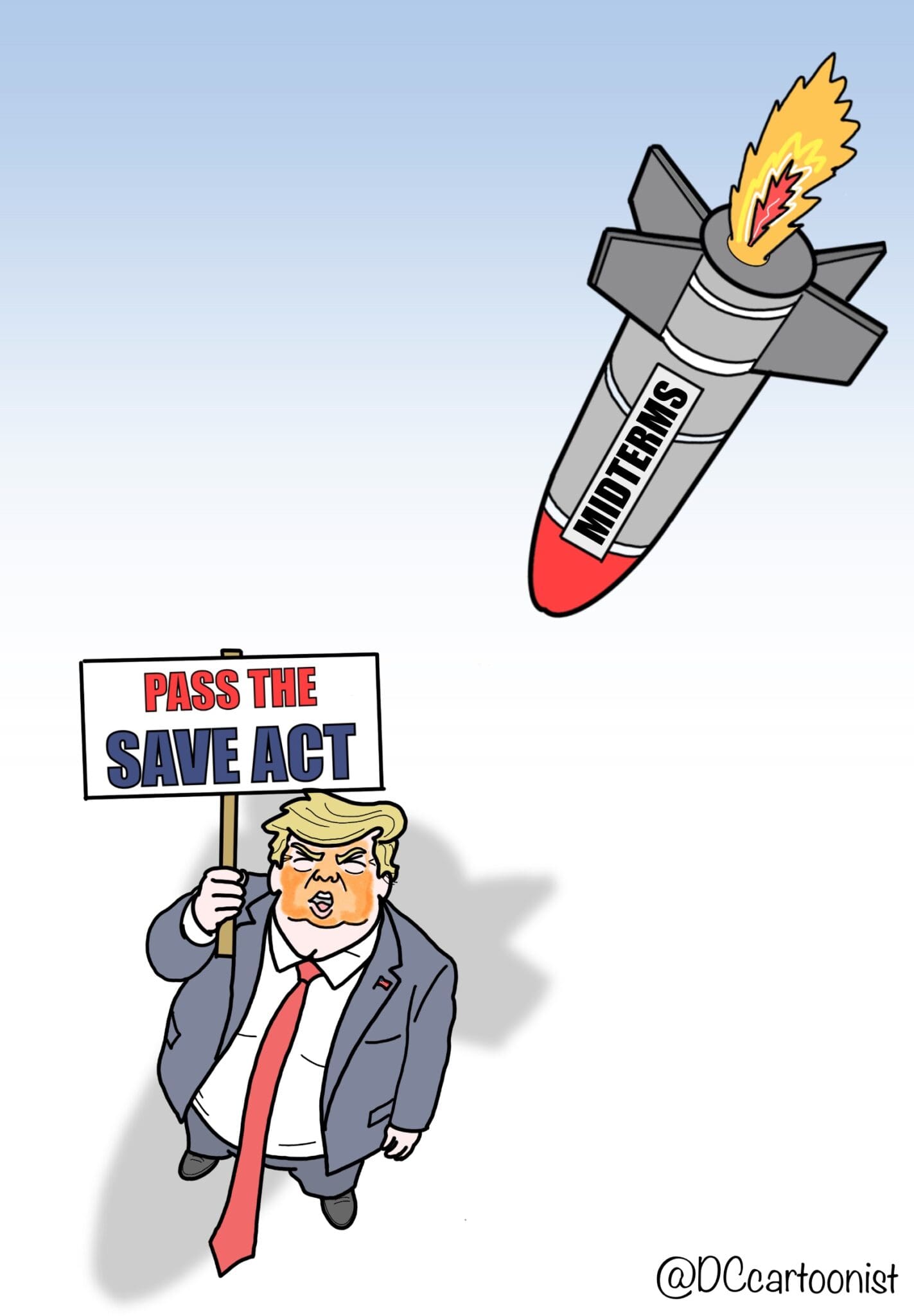
The Save Act Won’t Save Anyone
The Safeguard American Voter Eligibility (SAVE) Act is built on a premise that refuses to die: that hordes of noncitizens are casting ballots and swinging U.S. elections. This claim has been investigated, litigated, and debunked to exhaustion. Yet here it is again—now dressed up as federal legislation and pitched as a political lifeline for Republicans staring down weak approval ratings and a difficult election cycle.
The theory is simple: make voting harder, and you tilt the playing field. Some Republicans have been refreshingly blunt about it, acknowledging that stricter documentation requirements could suppress Democratic-leaning voters—particularly people of color, who are statistically less likely to have immediate access to passports or certified birth certificates with photo ID.
But here’s the part they seem to be skipping: barriers don’t come with party labels.
Roughly 12 percent of registered voters—about 28 million Americans—lack ready access to the kinds of documents the SAVE Act would require. That’s not a rounding error; that’s a political wild card. And while Democrats are often assumed to bear the brunt, the data suggests otherwise. Republicans are just as likely as Democrats to have qualifying documents—but they are more likely to rely on birth certificates rather than passports. And birth certificates are notoriously less reliable under strict verification regimes.
In other words, the very voters Republicans are counting on may be the ones tripped up at the ballot box.
There’s also the enthusiasm problem. Restrictive voting laws tend to weed out the least engaged voters. At the moment, Democrats—out of power and eager to regain it—are the more motivated side. If anything, the SAVE Act could thin the ranks of casual voters who might otherwise lean Republican.
Add in the fact that wealthier, more educated voters are far more likely to have the required documentation, and the outcome becomes even murkier.
So in the end, its difficult to say who may benefit politically from the SAVE Act, but it’s likely not the slam dunk that republicans believe.