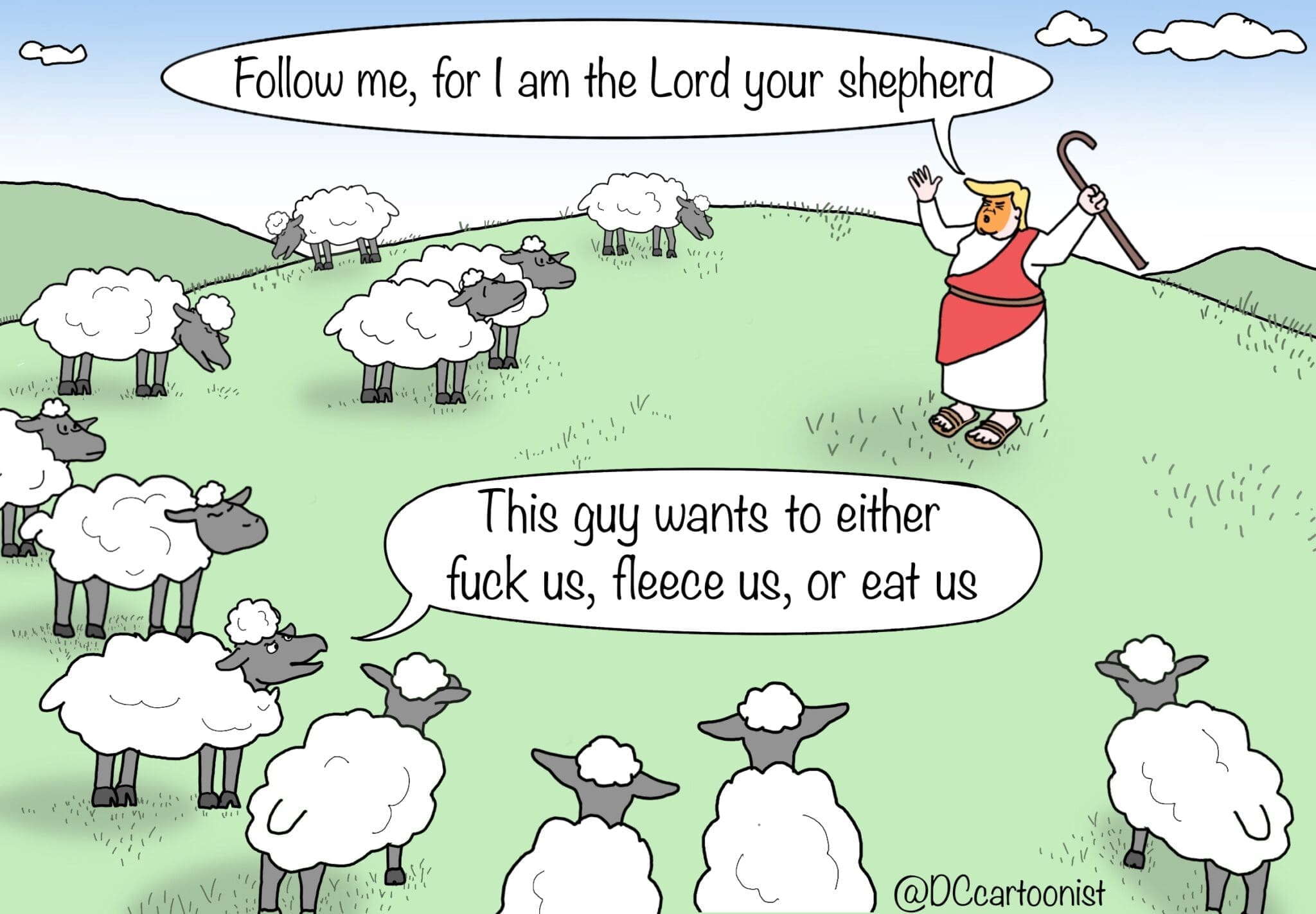
The Shepherd Who Fleeced the Flock
Much of the Bible’s most enduring imagery casts God as a shepherd and believers as his flock. In its most generous reading, the metaphor suggests care, guidance, and protection. A good shepherd tends to his sheep so that they “shall not want.” But the image has always carried a darker implication as well, one that Christopher Hitchens famously captured: shepherds don’t keep sheep out of affection. They keep them for what they can take.
That tension feels especially relevant in an era when political leaders increasingly lean on religious symbolism to elevate themselves. Recently, Donald Trump shared an image portraying himself in Christ-like terms. It was meant to project strength, sacrifice, even divinity. But it instead raises a more uncomfortable question: what kind of shepherd is he asking his followers to believe in?
Because Trump’s career, both in business and politics, has followed a familiar pattern. Loyalty is demanded, dissent is punished, and supporters are often treated less as citizens than as assets—people to mobilize, monetize, and, when convenient, discard. The relationship looks less like guidance and more like extraction.
The danger of the shepherd metaphor is not just that it flatters the leader. It diminishes the flock. It encourages obedience over judgment, faith over scrutiny. And when that metaphor is embraced uncritically, it becomes easier for followers to overlook whether they are being led—or simply used.
In the end, the question is not whether a leader claims to be a shepherd. It’s whether the flock is willing to ask what, exactly, they are being kept for.