Gerold of Abongan
By Vartan Koumrouyan
I wanted to have a drink with Gerold and every time I ran into him in the barrio, I talked about it to Sheryll, but she always objected without giving me a reason, even though he was born in Abongan as she had and they knew each other since childhood. I thought it was about his character, the way people saw him behave, that he was a drunk, the fool of the town, the black sheep, a nonconformist living on the margins, and it was better not to get involved with him. But he didn’t seem to be irrational to me. I’ve never seen him slouching or sleeping on the street or fighting, and for the few occasions we briefly talked, he was polite.
He walks bare chest under the rain or the burning sun with equal disregard, ploughing the rice field at six in the morning. He has an astonishing immunity to the Pacific dampness and weather fluctuation, certain that he has nothing to fear from either, and nothing will put him in bed to sweat and have feverish nightmares.
He was happy, but I didn’t ask who paid his bail or whether he was released on “parole”. When we cross each other’s path, we only acknowledge each other with a wave and a smile. I had the impression that our shyness implied we remain distant because we didn’t really know each other. There was the language barrier for sure, and any familiarity will be short lived because we won’t be able to communicate unless we had a couple of drinks to talk us into a debonair neighbourly behaviour.
His wife gave birth to a baby boy when he was in jail. She could not breast feed him because she was very skinny. Sheryll thought of getting her a Nido dry milk can and a feeding bottle, but she left to the south of the island to her family in Brooks Point when the police incarcerated him, and she came back when he was released.
-‘She has no one to feed her and the baby. He drinks too much’, Sheryll said.
We didn’t have the occasion to drink together, and I regret the lost opportunity. He goes on the muddy path with his machete and comes back with a stack of coconut fronds in a bundle on his shoulder for his wife to weave nipa shingles for his hut. He has an innate knowledge of the surrounding fauna, a body resistance, a shield against poor diet, hunger, fatigue, alcohol, mosquitoes or snakes. His musculature is akin to Atlas who shrugs body foibles and gets along.
I don’t know what it was, but his character spoke to me when I saw him ploughing the fields at dawn, guiding the carabao on the lumps of mud the iron blade turned under his feet, when the sun touched the clouds and the first rays rested on lines of silver furrows filled with water reflecting thin stripes behind him. I always thought that we would meet one sunny day, but it didn’t happen. My understanding was that people who drink look for mates who appreciate the camaraderie as much as the alcohol, because they are lonely, and needed the drink to find a meaning to what they say.
He seemed not to hold any grudges against his prison sentence, or the people who betrayed him; the spies who work for mayor, sitting all day on the bench in the barrio to collect the gossip of the natives. No grudge towards the police in person, but he certainly didn’t appreciate the institution as a military arm employed as an oppressive tool to repress free speech as it was in Paris, where the political elite seem to serve foreign interests. This is why he had my sympathies as much as Mero for his bold action to recover his freedom, escaping from his prison cell in Taytay.
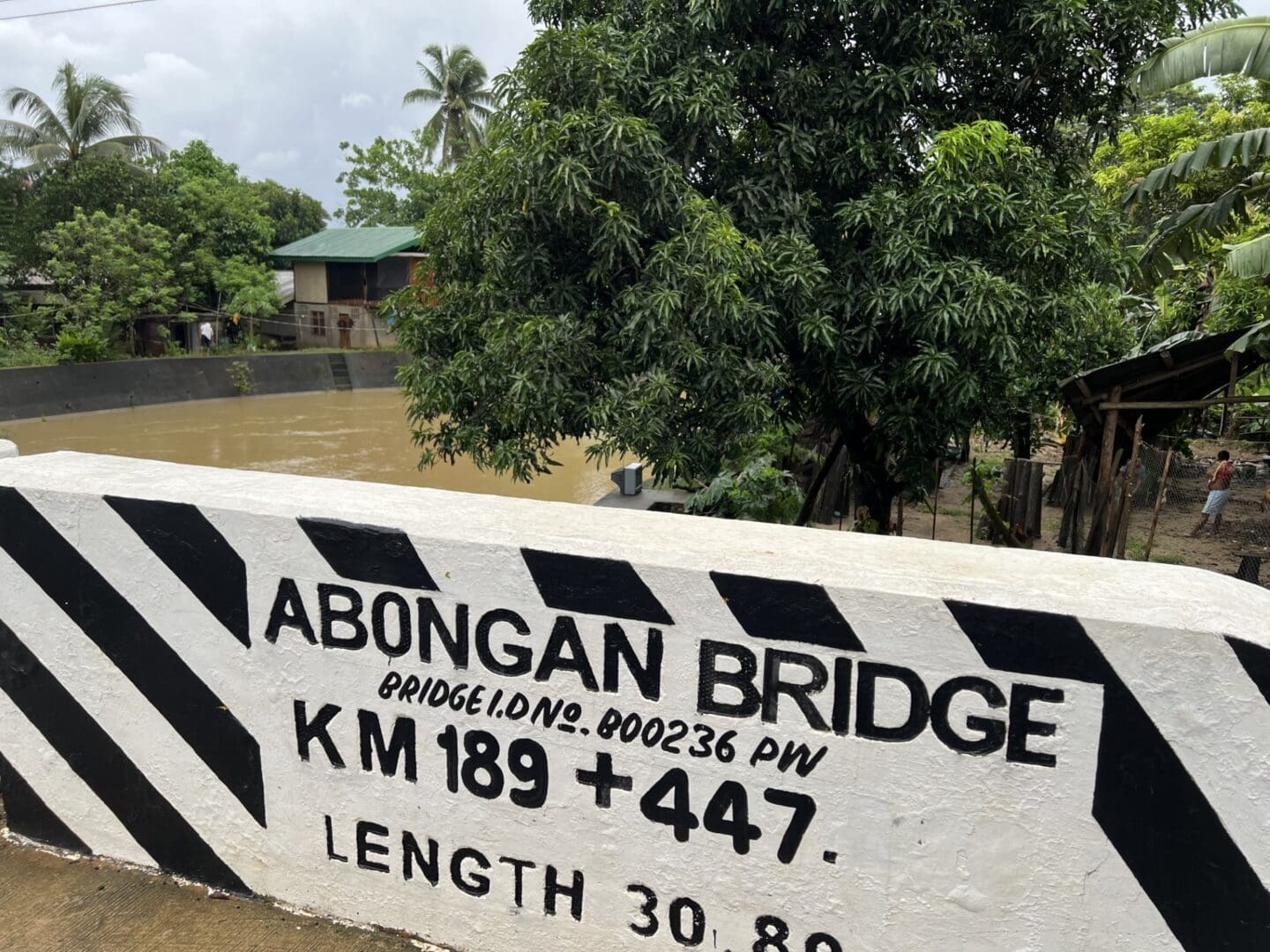
He was happy when I met him on Abongan bridge soon after the flood when we waited for a van to go to Puerto. He seemed to be in control of himself and his emotions. He saw the world in its triumph as he saw himself, wild, fantastic and free, motivated to do his best every day, be hired to plough or harvest the fields, deliver merchandise to the shops or help as a day labourer. A busy body not seeking repose but forging ahead in his tough manners.
After weeks in jail, collecting coconut fronds was real freedom to him. Perhaps no one cared for him in prison, but he was still proud to lift a fifty kilo sack of palay to his shoulder when I saw him near the bakery, to climb up the makeshift steps of the rice mill, smiling.
I saw him two Sunday ago in the church with his skinny wife, who speaks the Cuyonon dialect, the original language of Cuyo Islands in the Sulu Sea, and hardly any Tagalog, the official language of the country.
He perhaps has a Bible in his hut. Young Presbyterian regularly distribute free Bibles in the jeepney terminal in San Jose, but I doubt if he has the patience to read, or have any real connection to ‘God’ the way a supremacist does, but I sensed that he was blessed with a mental faith derived from hard work and didn’t seem to be the kind to trust God more than his strength. He’s not the soft character to genuflect when he enters the church, but keeps himself to himself and does not need the intercession of the Bible to be an honest man and be good to his family. He is strong and celebrates life the way he sees it, drinking, smoking, sweating, cursing to domesticate wilderness with his resolve.
I doubt if he prays in the church, as Uncle Rufo does, reading the holy book. Nor he seems to be searching for a meaning to life, a morality or a saving grace. Austere, solemn, smiling sometimes, Gerold doesn’t seem to care about the symbolic significance of the church, the physical building and its paraphernalia, even without paintings of saints, ornate candelabras, the pews, or the votive atmosphere, which look like a barn with a blue facade with two coconut trees and the presence of the pastor, a simple man in plain clothes. He nonetheless shows respect and refrains from smoking in front of Uncle Rufo when after the service we stood outside to briefly meet and part at noon, after mass.
On his nipa hut in Tamalarong, he has one of those New Year calendars posters distributed to families by the mayor, of Jesus as an attractive young man with long juvenile beard, blond hair and blue eyes, under heavenly light piercing from behind the mountains and dark clouds, riding a winged stallion with a raised hand, ushering the way through verdant dales along cascading rivers, as if he was the angel saviour.
It’s a shrewd salesman’s idea to franchise God on this remote island in this manner, but Gerold sees the opportunistic side of it, because he has nailed the poster on the swali bamboo partition from outside to protect his hut when the rain comes aslant during a storm.
The rooster attached to a bamboo near the window trap of his hut, on full moon nights, crows every hour as if it possessed an intuitive sense of the cosmos to keep vigil. Only Galileo understood it better than his roosters perhaps, perched on a piece of wood hammered to the coconut tree, patiently waiting for the world to turn on itself to crow again and again and again, from dawn to dusk.
Nonchalant, on Saturday, we saw him walk towards the swamp near a big mango tree, and as he reached the limit of the stagnant water, forded across the reeds and stepped into it without hesitation, holding two rods wide apart in his hands, connected by wire to a battery strapped on his shoulder, which he lowered into the water to electrocute the hiding fish, confident he will get one for his soup. He disappeared behind the reeds for a moment and resurfaced at the end of the swamp, climbed out of the edge and walked away to his hut without looking back, and that was the last time I saw him.